On Milos, light is the first thing you notice. It colors the stone first, then the sea, and only after that do you fully understand where you’ve arrived. In this part of Greece, the landscape is not something you observe from a distance like a postcard view. You enter it slowly, step by step, until the line between arriving and staying quietly disappears, and you begin to belong to its rhythm without effort.
From the very first moments, you realize that things here are not arranged according to the logic of “what must be seen,” but according to the logic of light and space. The rocks shift in tone as the sun moves, the sea changes depth and color without warning, and together they create the feeling that time itself is just another element of the landscape rather than a frame around it.
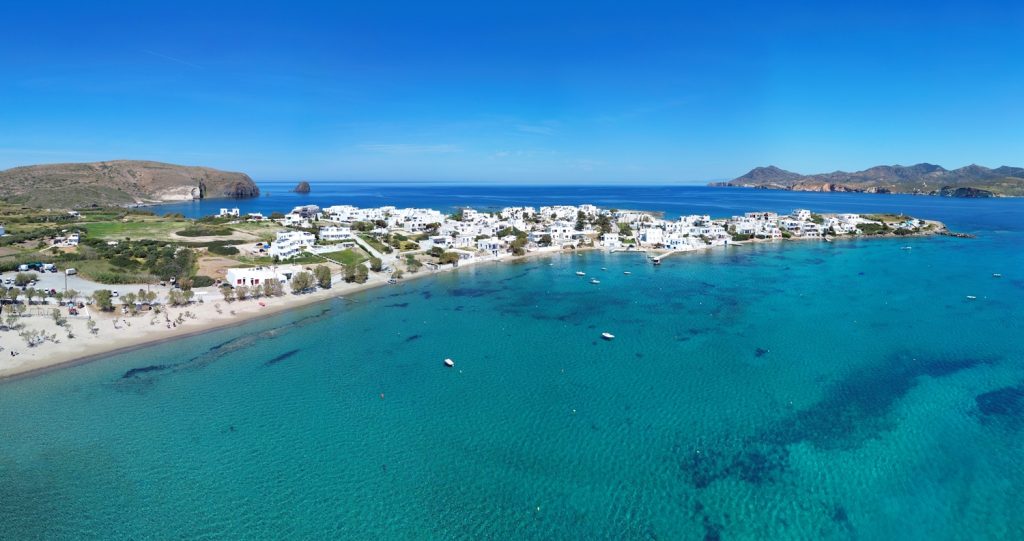
On Milos, you do not chase special moments because they naturally settle into the day on their own. Instead of following a plan, you follow what happens along the way: the wind through the coves, the people you begin to recognize, the calm that arrives without announcement.
The island has around five thousand residents, and you feel that quickly. Someone greets you in passing, the local bakery remembers you after the first day, and familiar routines form without effort. Very early on, you understand that Milos is not a place you simply visit, but a space where everything already feels strangely natural and familiar.
Sirmata Houses: Architecture Born from Necessity That Became the Island’s Identity
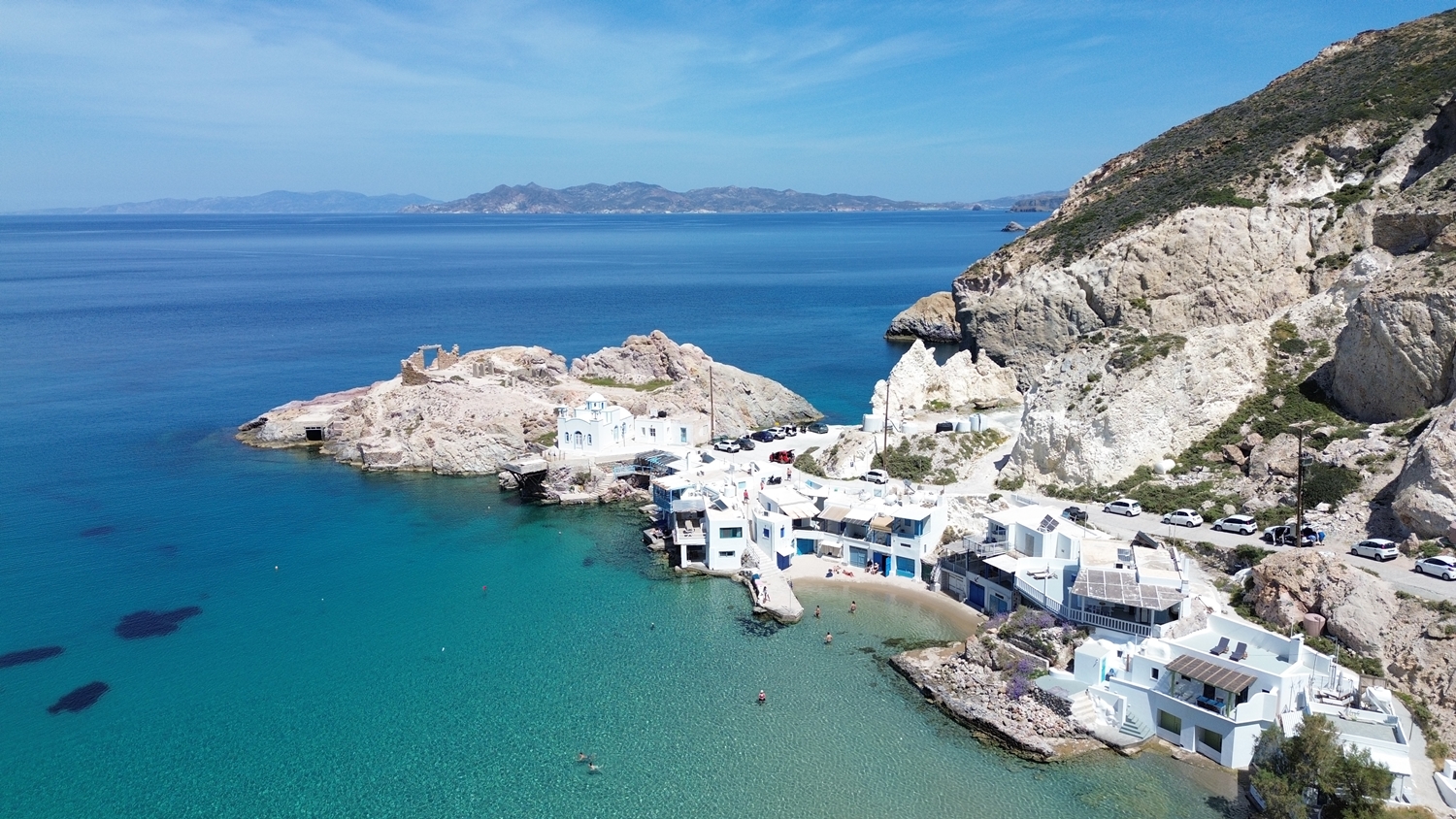
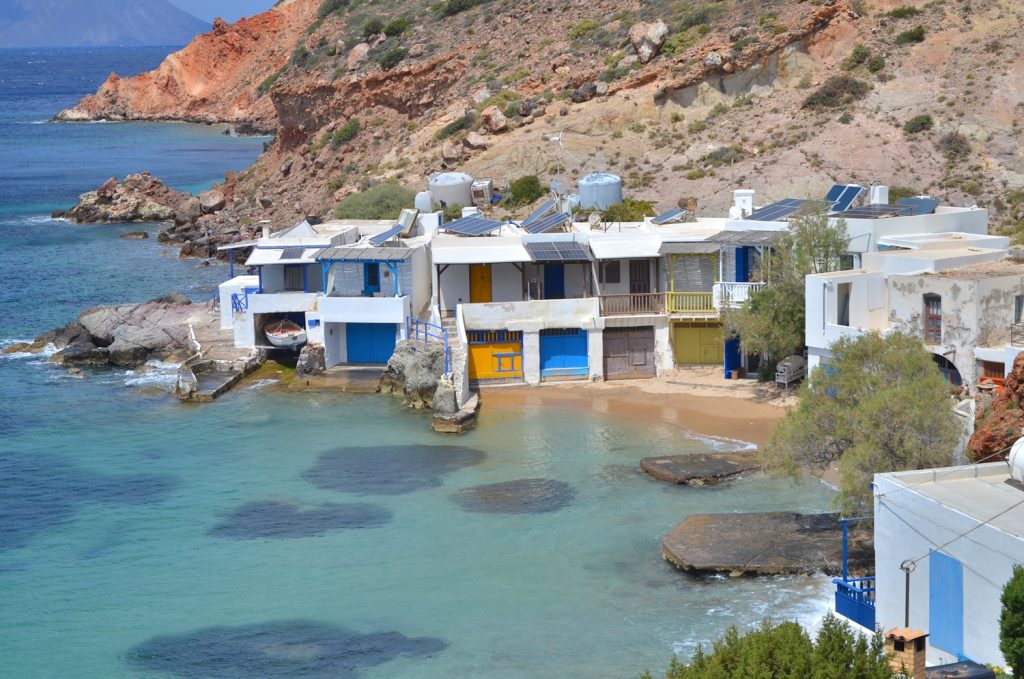
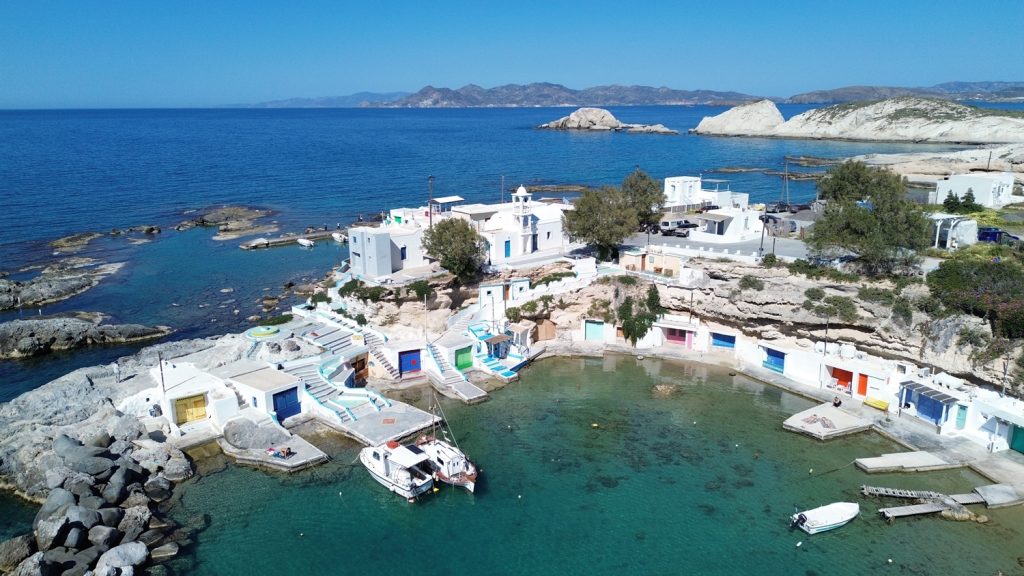
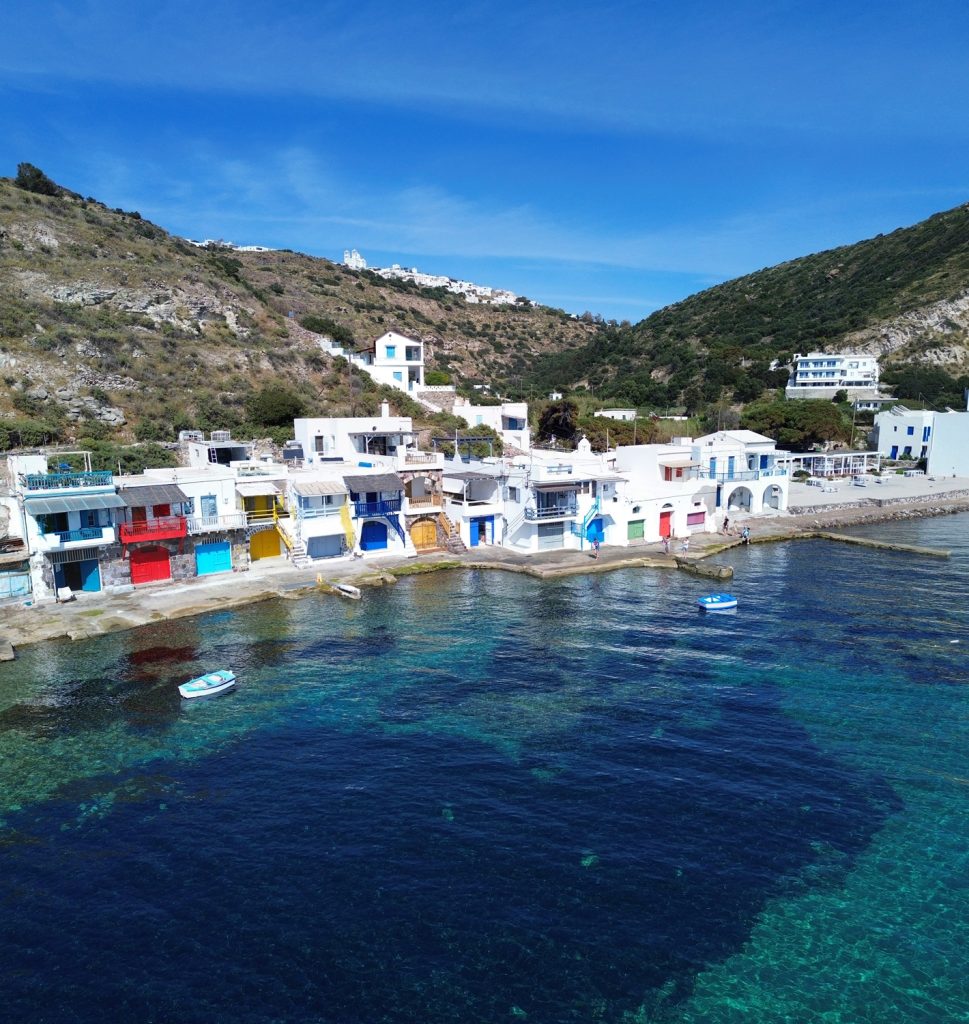
One of the most recognizable visual elements of Milos are the sirmata houses found in villages like Mandrakia and Firopotamos. At first glance, they look like a perfectly designed film set or a postcard scene, but their origins are far more practical and sincere.
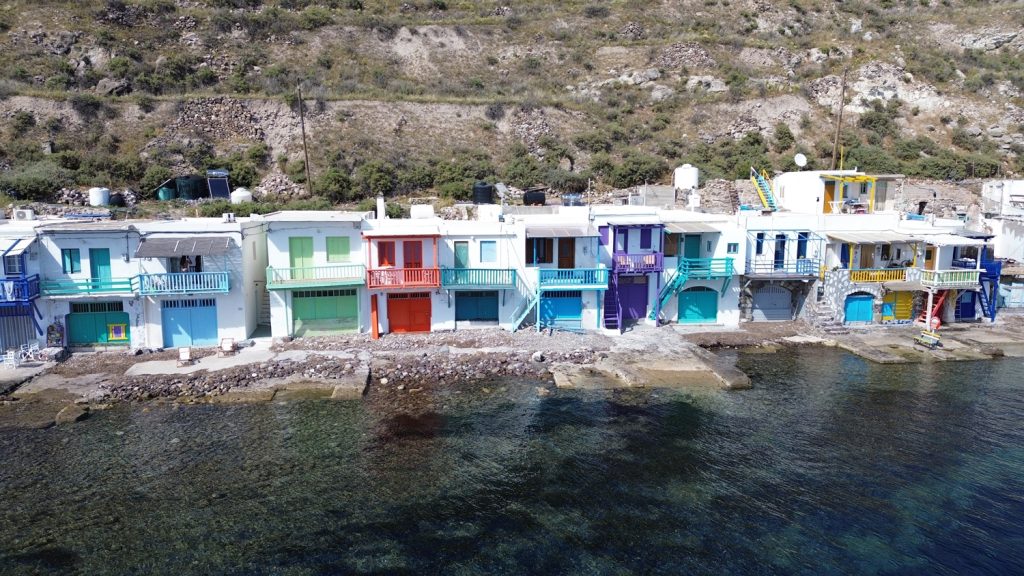
The lower part of these homes was originally used to store boats. Fishermen would pull them directly into spaces carved into the rock to protect them from wind and sea. The upper level served as a simple living and working space. Today, many have been transformed into luxurious traditional accommodations, yet they still retain their original character.
What makes them special is not only their appearance, but their relationship with the sea. Here, the sea is not a backdrop; it is an extension of the living space itself. The sound of waves enters daily life, the light changes constantly throughout the day, and the boundary between indoors and outdoors almost disappears.
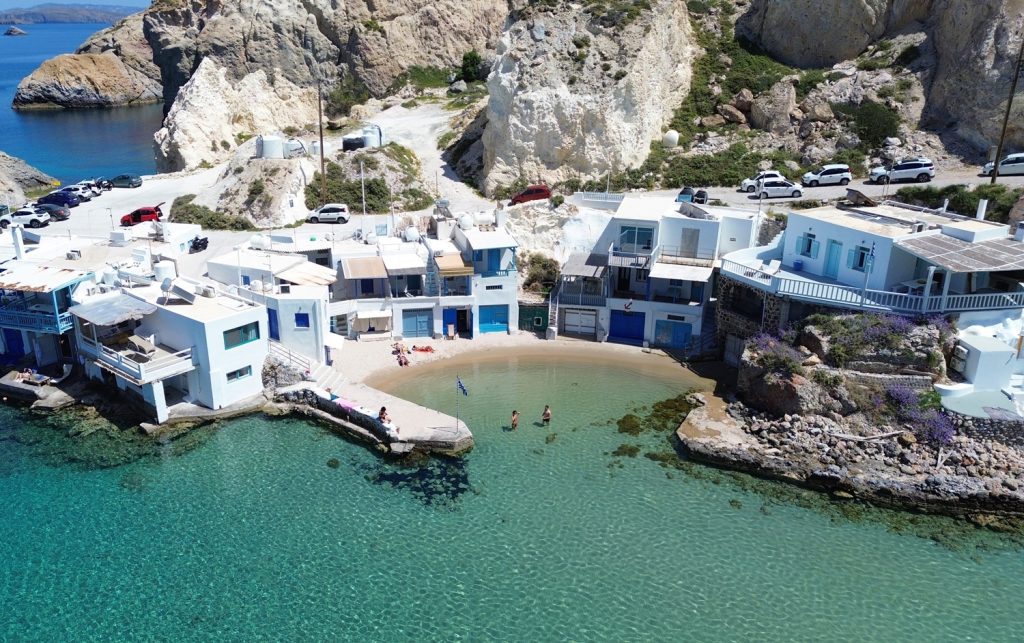
Sirmata houses are not decoration. They are a way of life that simply continued in another form.
Beaches That Redefine the Mediterranean
The beaches of Milos are not variations of the same story. They are entirely different worlds.
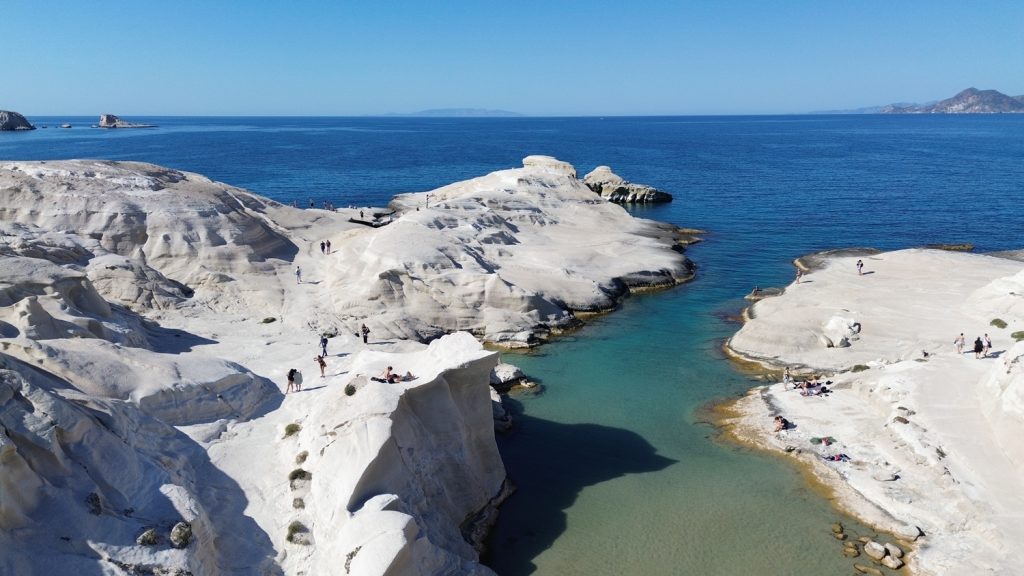
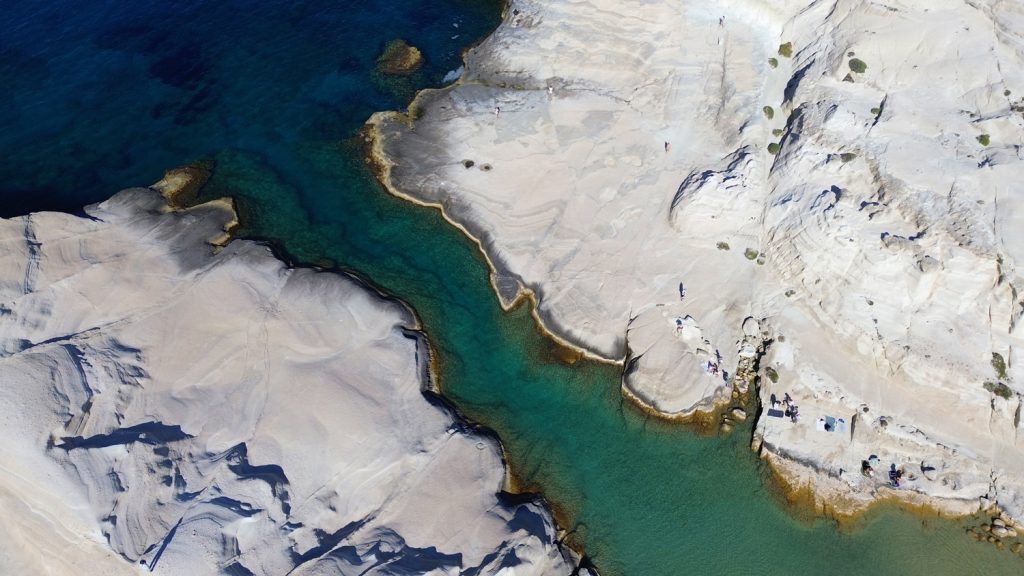
Sarakiniko looks like a landscape that does not belong to any familiar geography. White volcanic rocks create a surface that feels almost extraterrestrial, as if you are walking on the moon. The sea changes color depending on the light and time of day, so the scenery never appears exactly the same twice.
Kleftiko offers a completely different experience. It is reached by boat, and the journey itself becomes part of the story. Entering the towering white cliffs, passing through natural tunnels and hidden coves, creates the feeling of entering a secret enclosed world. Once a pirate hideout, it is now a place where people stay far longer than planned because there is simply no reason to rush.
Firiplaka and Tsigrado reveal another side of the island. Firiplaka, with layers of red, orange, and white rock, resembles a natural archive of time itself. Tsigrado requires climbing down through narrow passages between cliffs, and that approach changes the entire feeling of arriving at the beach.
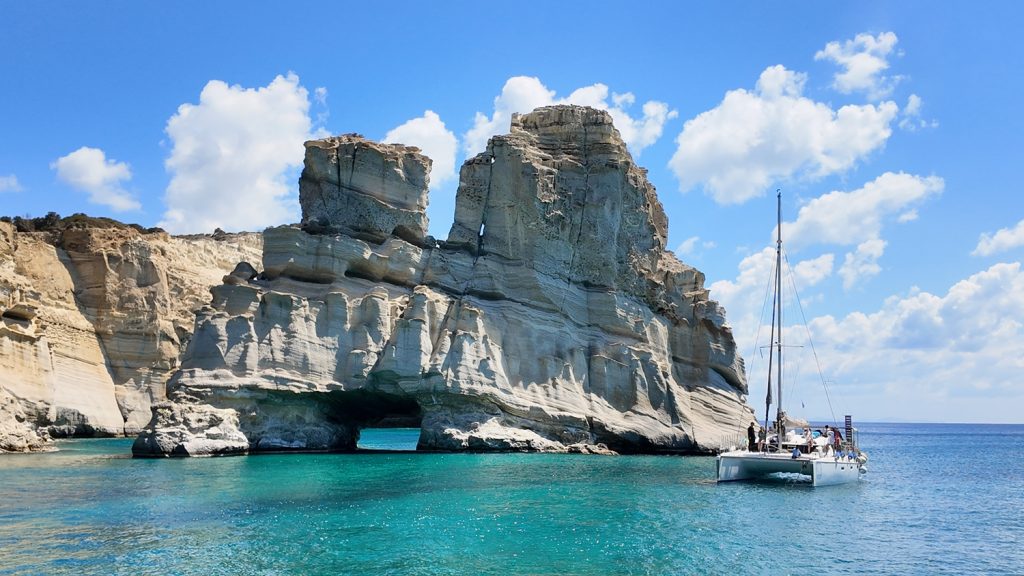
On Milos, the beach is not a destination but a state of being where you remain longer than intended.
Understanding Milos Through the Sea
If there is one way to truly understand Milos, it is from the sea. From land, you only see fragments. Sailing reveals the whole.
The coastline is deeply carved with hundreds of coves and rock formations that change character every few minutes. The sea is never uniform. In some places it is calm as glass, elsewhere dark and deep, and in others so transparent it almost feels invisible.
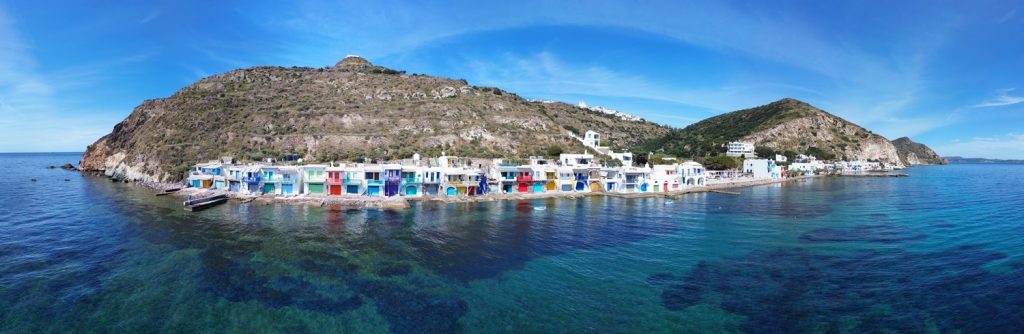
Kleftiko may be one of the central points of these routes, but what stays with you is not only the destination. It is the entire journey there and back, through landscapes that seem designed for slow movement and long uninterrupted gazes.
Food as an Extension of Local Life
On Milos, food is not a concept or performance. It is simply a continuation of everyday life. There is no need for reinterpretation because everything comes from simplicity and local tradition.
Pitarakia are one of the clearest examples of traditional Milos cuisine. These small pies filled with goat cheese are lightly crisp on the outside and soft inside, without unnecessary seasoning, simple yet deeply memorable in flavor.
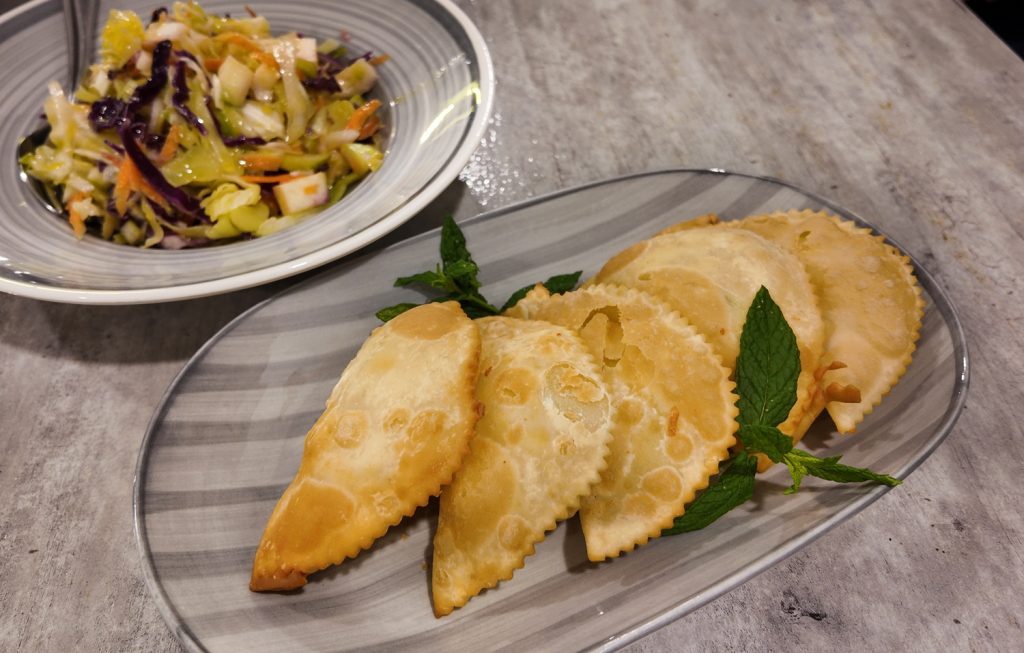
Desserts made with fig jam are gentle and understated, naturally sweet without excess. They do not feel specially crafted for visitors, but rather like something that has quietly existed as part of everyday life for generations.
Seafood and fish carry an additional dimension because they come from the same sea that constantly shapes the island’s visual experience. Even without consciously analyzing it, that changes the way you experience the meal itself.
An Island Important Long Before Tourism
Milos has a history inseparable from its present. Even in ancient times, it was known for its natural resources and strategic location.
The island is rich in minerals such as bentonite, perlite, and kaolin, which are still mined today. Milos was never isolated; it has always been connected to broader economic and industrial flows.
The most famous symbol of its past is the Venus de Milo, now housed in the Louvre. Her origins on the island give Milos a cultural weight that may not be immediately visible, but can still be felt through its stories.
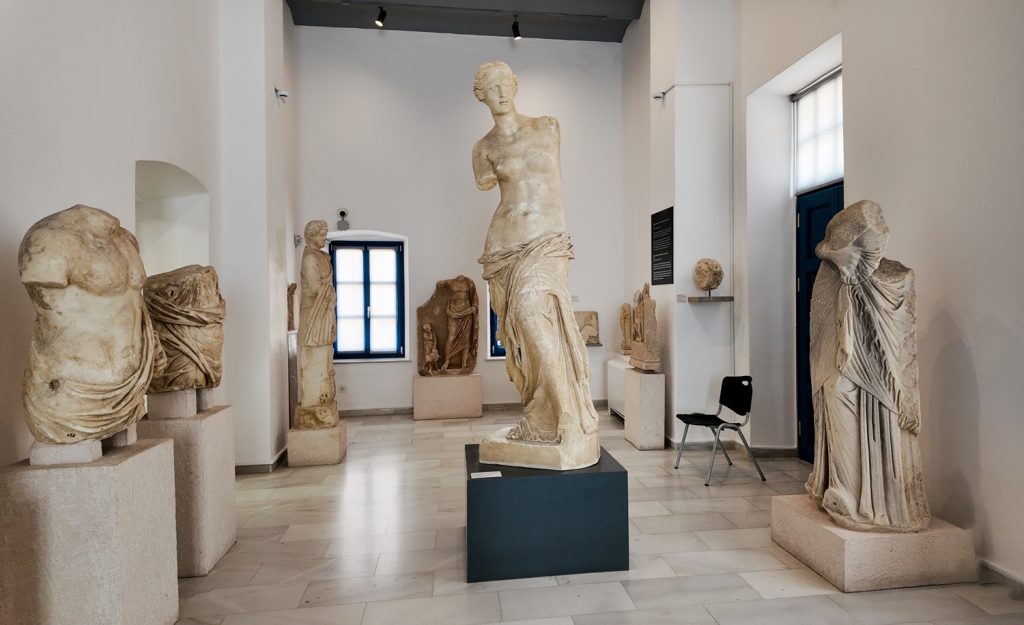
The Archaeological Museum and the Mining Museum of Milos present two parallel histories — ancient and industrial — that continue to coexist today.
During the Peloponnesian War, Milos attempted to remain neutral and avoid becoming involved in the conflict between Athens and Sparta. Athens demanded an alliance, while the island refused in order to preserve its independence.
Thucydides wrote about the dialogue between the Athenians and the people of Milos. Today, it is remembered as one of the clearest examples of the contrast between political power and the right to choose, where one side speaks from the position of force and the other from the position of principle.
After the refusal, Athens seized the island by force. The event remains a historical example of how decisions in war are often determined not by fairness, but by power itself, which is why it is still frequently referenced in political theory today.
Arriving on Milos and the Way the Island Slows Travel Down
Most travelers reach Milos through Athens. Usually this means flying to Athens first, then taking either a short domestic flight or, more commonly and more beautifully, a ferry from the port of Piraeus. That journey by sea already begins doing what the island itself continues later: slowing things down.
Ferries run regularly, and the trip lasts several hours — enough time to completely change the rhythm in which you think about travel. During the high season, planning ahead is recommended because tickets sell out quickly, especially for faster boats.
Another option is flying directly to Santorini and continuing by ferry, which works well if you are combining several islands in one trip. But arriving directly to Milos by sea has one clear advantage: the island does not reveal itself all at once, but gradually, as you approach the coastline.
A Climate That Shapes the Rhythm of the Day
Milos has a typical Aegean climate, though with enough variation for each season to have its own character.
From June to September, the days are warm and dry, with temperatures often exceeding 30°C. Sea winds soften the heat, so time spent on the beach rarely feels exhausting in the way it can elsewhere in the Mediterranean.
May and October are particularly interesting months. Temperatures remain pleasant, the sea is still warm enough for swimming, yet the island becomes significantly calmer. This is when its true rhythm is most visible, without the intensity of peak season.
Winter is quiet, almost withdrawn. There is little tourist energy, and the island belongs entirely to local life in its purest form.
When to Visit and How to Choose the Right Moment
June and September are the most common choices. June brings the beginning of the season without the full pressure of crowds, while September carries the feeling of mature summer — warm sea, softer light, and a more relaxed atmosphere.
July and August are the liveliest months, with the highest number of visitors and boat tours, yet even then Milos retains its essential quality: it never feels overwhelmingly crowded in the way many other famous islands do.
If your goal is peace and space, late May and early October often offer the best balance between weather, sea conditions, and the island’s natural rhythm.
Moving Around the Island
Milos is not an island you understand from a single location. Renting a car or scooter is practically essential because public transport only covers the main routes.
What makes the island special is not only where you go, but how you move between places. Drives are short, yet they pass through constantly changing landscapes — from volcanic rock formations to tiny fishing villages and wide open sea views.
There is a feeling that every curve in the road reveals another layer of the island, without needing to plan it in advance.
In the end, Milos does not remain in memory as a collection of places you visited, but as one continuous flow of days where everything unfolds naturally and without interruption. Beaches, boat rides, small coastal villages, and accidental moments all connect into a single rhythm, as if they were always part of the same image.
And that is why Milos is not something you bring home through one scene or photograph, but through the way it quietly changes your sense of simplicity after the journey. As if somewhere along the way, it recalibrates your idea of how little actually needs to happen for a day to feel complete.