


In the Mediterranean, there is still an island that has not lost its silence, space, or soul. An island where landscapes do not change with trends, where tradition is not decoration but a way of life, and where nature and history exist in perfect balance. Gozo is a place that wins you over slowly and once you experience it, it remains etched in your memory forever.
Smaller, quieter, and greener than Malta, Gozo feels like its older, wiser sibling. It is an island that does not try to impress with quantity, but with quality of experience. You come here to slow down, to look farther, breathe deeper, and feel the Mediterranean as it once was.
An Island of Cathedrals and Monumental Silence
Gozo is known as one of the most religious areas in the Mediterranean, and its churches are not merely places of worship, they are architectural and cultural pillars of the island’s identity. Nearly every village has its own monumental church, often disproportionately large compared to the number of residents, yet perfectly integrated into the landscape.
The most impressive is the Ta’ Pinu Basilica, the spiritual heart of Gozo and one of the most important pilgrimage sites in Malta. Isolated among rolling hills, surrounded by silence and open space, the church feels almost surreal. Its interior, mosaics, and the light filtering through stained glass leave a powerful impression, even on those who are not religious.
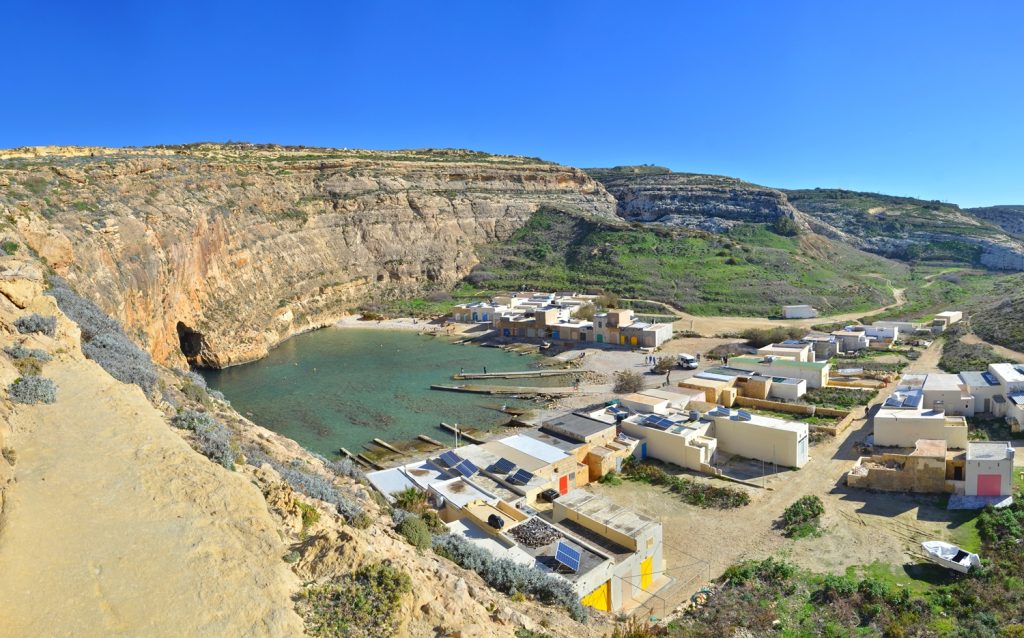
In Victoria, Gozo’s capital, stands the Cathedral of the Assumption, located within the walls of the Citadel. Its famous domeactually an optical illusion is one of the most fascinating details of sacred architecture in the Mediterranean.
Also worth mentioning are St. George’s Basilica, lavishly decorated with gold details and artworks, and the Rotunda of St. John the Baptist, whose massive dome is one of the largest in Europe and visible from nearly every part of the island.
Victoria and the Citadel – The Heart and Soul of Gozo
At the very center of the island lies Victoria, the administrative, cultural, and historical hub of Gozo. The town is lively, yet never chaotic. Towering above it is the Cittadella, a massive fortress whose history dates back to Roman times. Once a refuge for islanders during pirate and invader attacks, today it stands as a symbol of resilience and continuity.
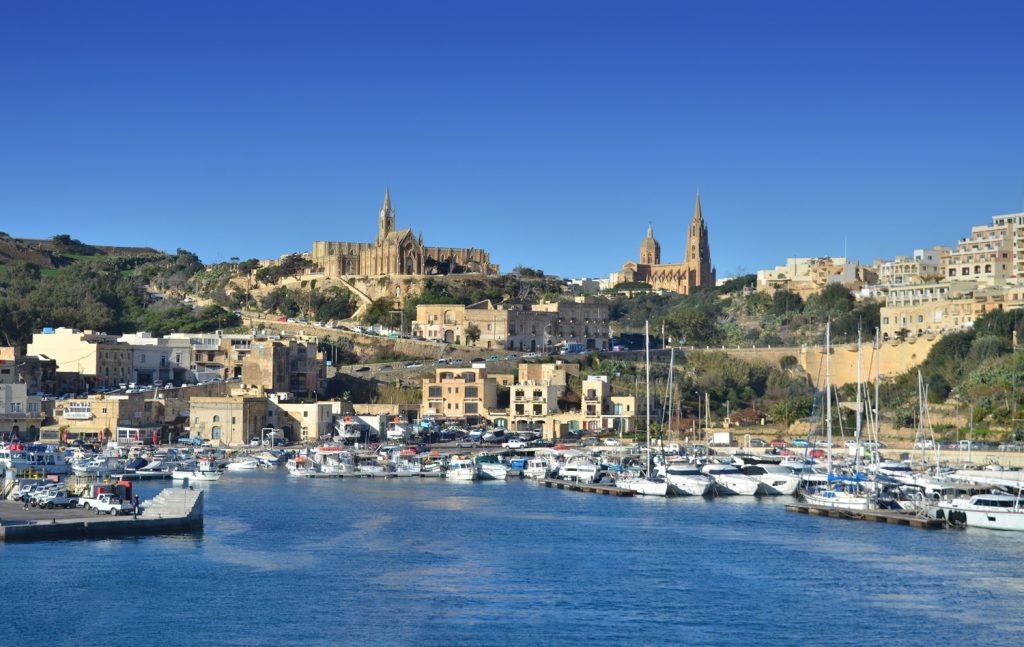
A walk along its walls offers panoramic views across the entire island, fields, villages, church towers, and the surrounding sea. Within the Citadel you’ll find museums, old prisons, the cathedral, and narrow stone streets that tell stories of centuries of struggle, faith, and survival. This is where the true character of Gozo is best understood.
Gozo on Film – The Island the Camera Loves
Thanks to its dramatic landscapes, untouched nature, and authentic architecture, Gozo has attracted film crews from around the world for decades. The most famous production filmed here is, of course, Game of Thrones. The iconic wedding scene of Daenerys Targaryen and Khal Drogo was filmed in the Dwejra area, on its dramatic cliffs.
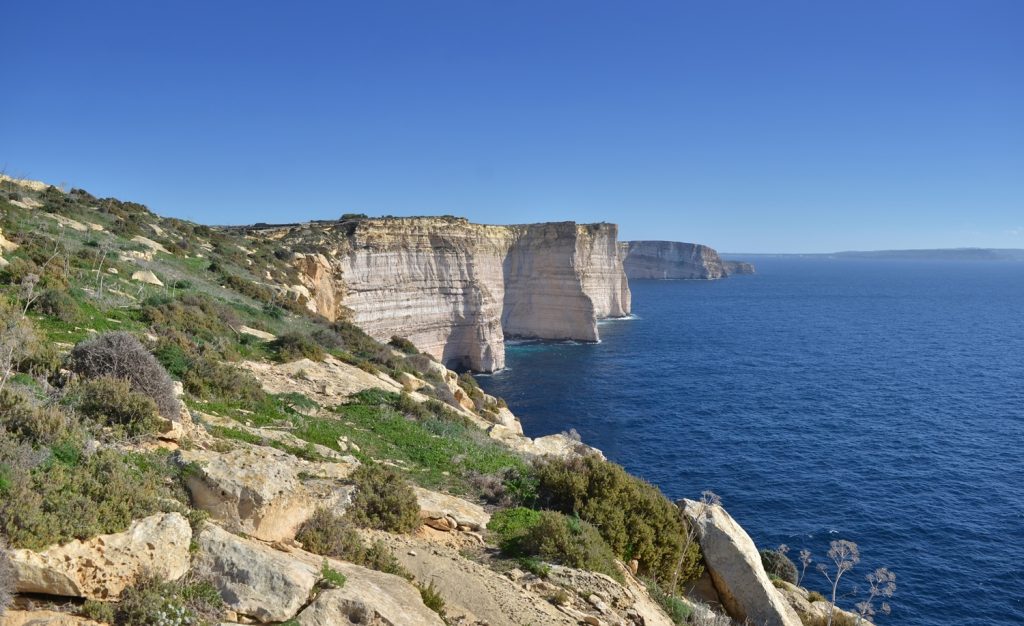
In addition to Game of Thrones, Gozo has served as a location for films and series such as Troy, The Count of Monte Cristo, Clash of the Titans, and The Odyssey, among numerous European productions. The island often “plays” ancient Greece, biblical landscapes, or mythical worlds, because it possesses an authenticity that is nearly impossible to recreate in a studio.
Mythology and the Island of the Nymph Calypso
Gozo is not only historically and cinematically fascinating it is deeply rooted in mythology. According to Homer’s Odyssey, this is believed to have been Ogygia, the home of the nymph Calypso, who seduced and held Odysseus captive for seven years.
Calypso’s Cave, overlooking Ramla Bay, still carries this legend today. Regardless of historical accuracy, the energy of the place is powerful. The view of the sea and the profound silence awaken the imagination and create a sense of timelessness. Gozo often feels like an island suspended between reality and myth, a place where the boundaries between history, legend, and nature fade.
Ġgantija – A Civilization Older Than the Pyramids
On Gozo lies one of the world’s most fascinating archaeological sites: the Ġgantija Temples, the second-oldest free-standing stone structures on the planet older even than the Egyptian pyramids. Built over 5,500 years ago, these megalithic temples testify to a civilization whose knowledge, organization, and spiritual life still puzzle scientists today.
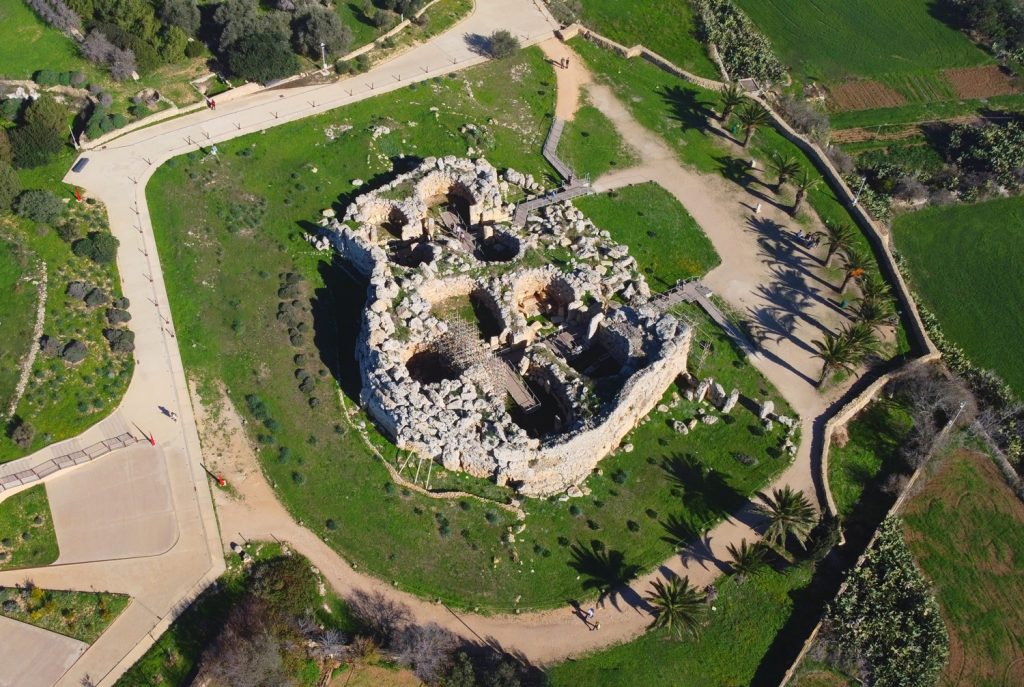
Massive stone blocks, some weighing dozens of tons, were positioned with remarkable precision. According to local legend, the temples were built by giants hence the name Ġgantija. What is certain, however, is that this site carried profound ritual and symbolic meaning. Walking through the complex is not merely an encounter with history, but with the very beginnings of humanity’s need for faith, community, and purpose.
Ġgantija is not just a monument of the past, it is a quiet reminder of how deeply Gozo is rooted in the foundations of European civilization.
The Most Beautiful Beaches of Gozo
Gozo captivates with a sea that shifts in color throughout the day and a coastline that feels untouched and sincere. Its beaches are not made for mass tourism, but for experience for quiet moments, horizon gazing, and slow enjoyment of nature.
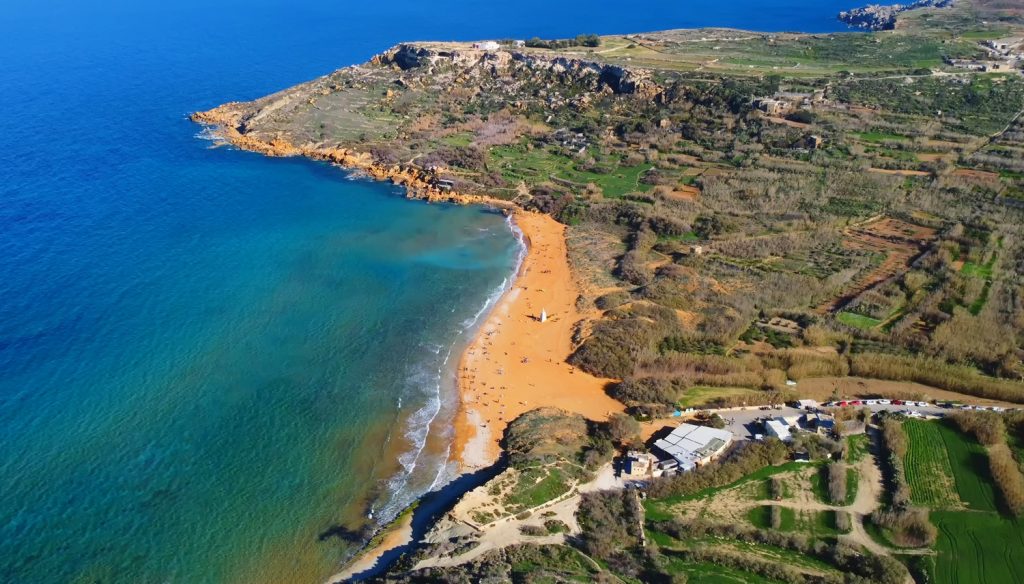
Ramla Bay is the island’s most famous beach and one of its most iconic images. The reddish-golden sand glows warmly under the sun, creating a striking contrast with the deep blue sea. Surrounded by gentle hills and green slopes, Ramla offers a feeling of openness and freedom.
Hidden among lush hills, San Blas Bay radiates intimacy and peace. Reached via a steep path, its very isolation preserves its character. Turquoise waters, silence, and natural surroundings make it perfect for those seeking complete escape.
The coves around Dwejra offer an entirely different experience, raw, dramatic beauty and some of the best diving locations on the island.
Practical Tips and the Best Time to Visit
Gozo is easily reached by ferry from the main island of Malta, with the crossing taking about 25 minutes. Even the ferry ride brings a noticeable shift in rhythm and atmosphere.
The best time to visit is spring and early summer, as well as autumn. Temperatures are pleasant, the island is green, and it is not overcrowded. Summer brings more visitors, yet Gozo remains quieter than Malta. Renting a car or scooter makes exploration easier, though the island is compact enough to be enjoyed at a slower pace.
What sets Gozo apart is not just its beauty, but its peace. It is an island for those who wish to escape noise, but not substance. For those who seek depth rather than surface shine. An island that offers not spectacle, but balance.
And therein lies its secret. Gozo does not try to be the best of the Mediterranean. It simply is its purest, quietest, and most authentic version.


