There are two Santorinis.
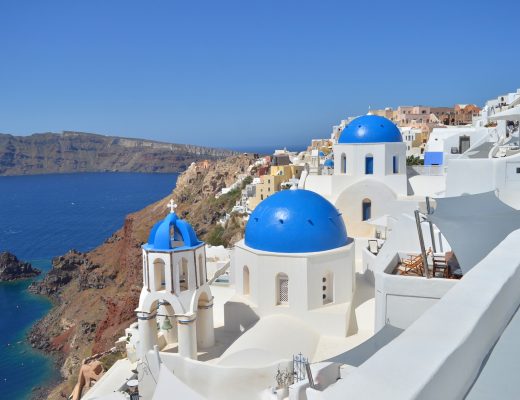
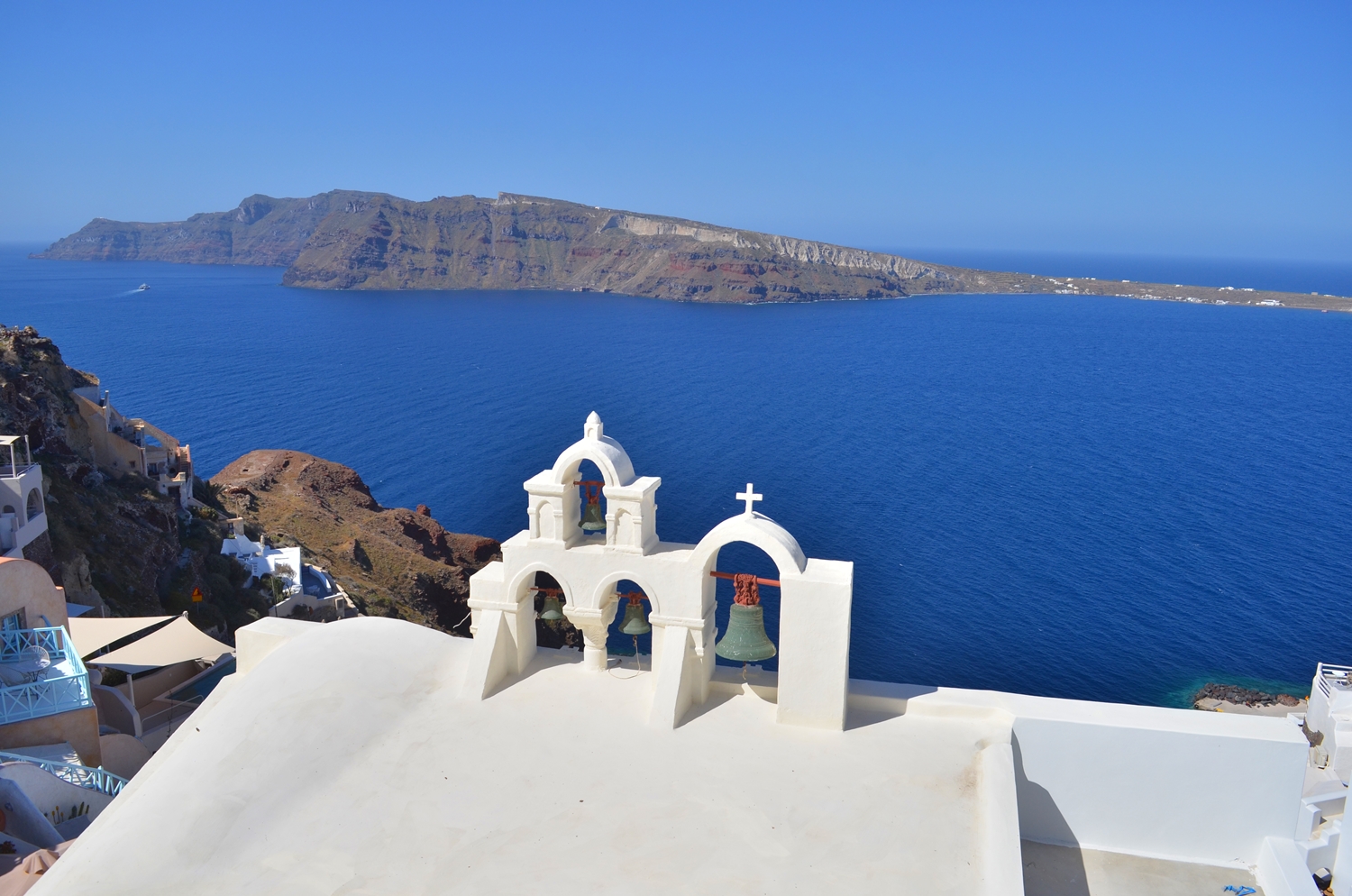
The first is the one everyone already knows, whitewashed houses hanging dramatically above the caldera, blue domes in Oia, infinity pools melting into the Aegean, and sunsets endlessly recreated through smartphone screens. That Santorini is spectacle. It is beautiful, cinematic, and impossible not to admire.
But there is another Santorini: quieter, slower, and infinitely deeper. It lives inside old wine caves transformed into cultural sanctuaries, in volcanic gardens where microgreens grow from black soil, and among archaeological ruins that revealed to the world that this island is far more than a luxury honeymoon destination.
That second Santorini is the one travelers remember long after they leave. If you want to experience Santorini off the beaten track, there are three places that tell the island’s story better than any sunset viewpoint ever could: the Symposion Cultural Center in Megalochori, the volcanic farm of Kisiras Microgreens in Pyrgos, and the extraordinary Akrotiri Archaeological Site, a discovery that arguably helped place Santorini on the map of global tourism.
Symposion Megalochori: Where Ancient Greek Music Still Breathes
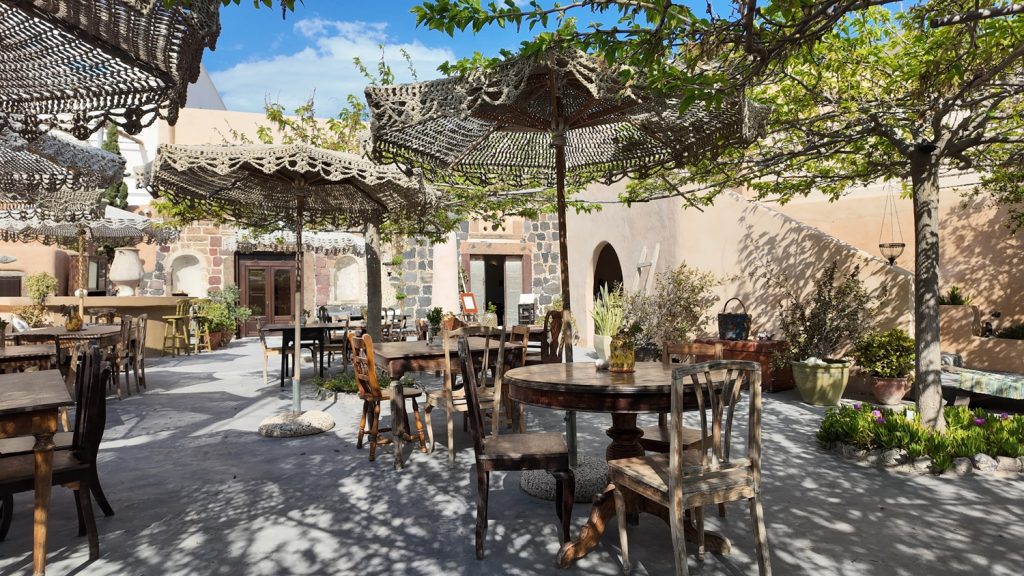
Megalochori is one of those villages that feels untouched by time. While crowds drift toward Fira and Oia, this small settlement still moves at a gentler rhythm. You hear footsteps echoing on stone alleys, conversations carried through shaded courtyards, and the distant clinking of wine glasses under bougainvillea-covered terraces.
Hidden within the walls of a restored 19th-century winery is Symposion, one of the most fascinating and unexpected cultural spaces on the island.
At first, it is difficult to define what Symposion actually is. It is not quite a museum, not exactly a concert hall, and far more immersive than a typical cultural center. It is a place where music, mythology, philosophy, and ancient Greek tradition merge into a living experience.
The name itself comes from the ancient Greek word “sympinein,” meaning “to drink together.” In classical Greece, a symposium was a gathering dedicated to conversation, storytelling, art, and intellectual exchange. Today, Symposion revives that spirit in a beautifully contemporary way.
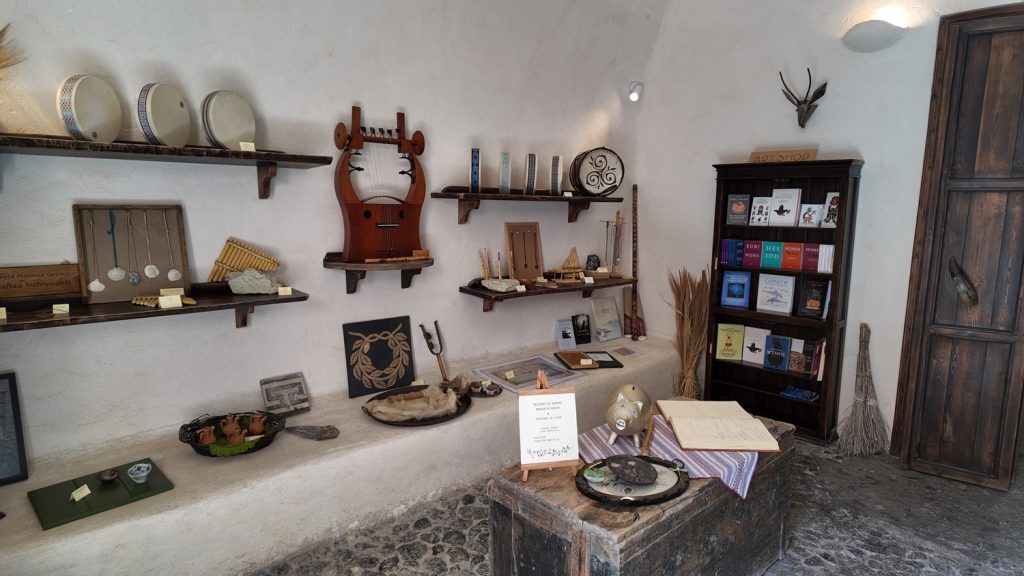
Stepping inside feels almost surreal. The old stone wine cave has been transformed into a space filled with handcrafted instruments inspired by ancient Greece. Lyres, flutes, percussion instruments, and strange stringed creations line the walls like artifacts from another world. Then the music begins.
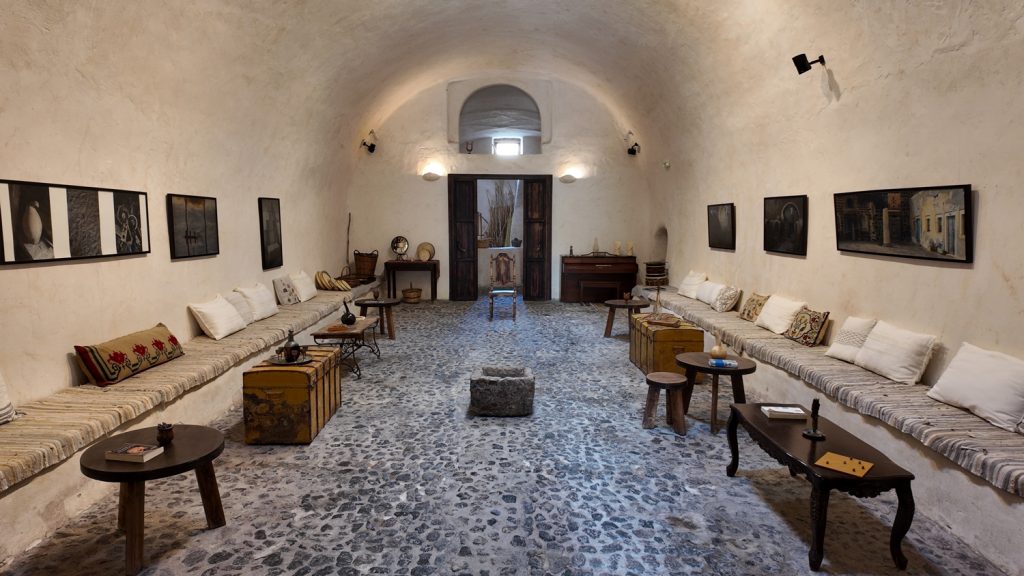
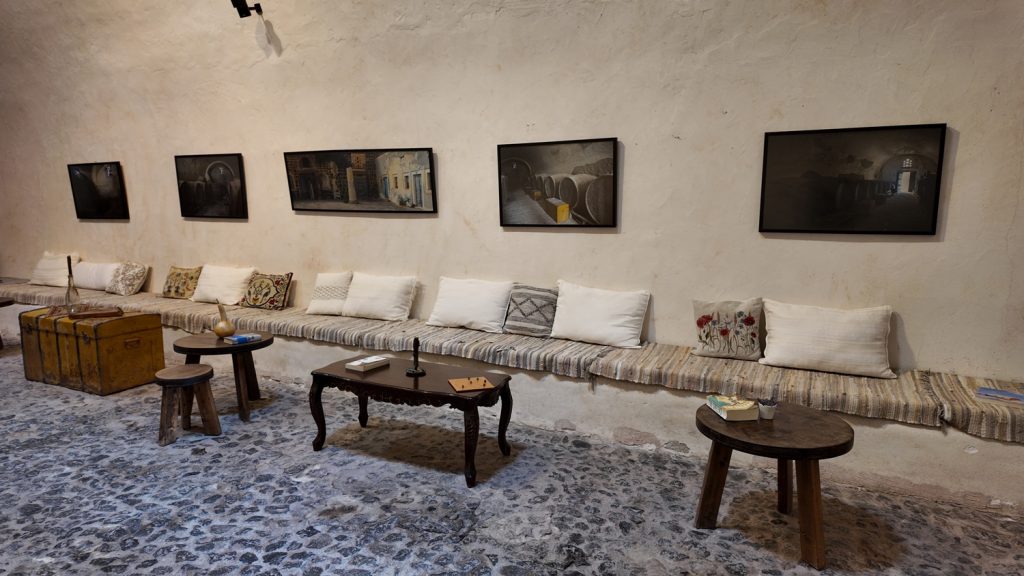
The acoustics inside the cave-like chambers are mesmerizing. Sounds resonate through the stone with an almost ritualistic atmosphere, making the experience feel less like a performance and more like a journey into another era.
Founded by musicians and artists Yannis Pantazis and Argy Kakissis, Symposion is deeply rooted in the study of ancient Greek musical traditions and mythology. Visitors can attend interactive presentations, storytelling sessions, workshops, and intimate evening performances beneath the stars.
What makes Symposion truly unforgettable is that it does not try to impress through luxury or spectacle. There are no giant signs, no crowds fighting for photographs, no carefully staged “Instagram moments.” Instead, there is a rare sense of discovery, the feeling that you have stumbled upon a secret side of Santorini that mass tourism has not fully consumed.
Sitting in the courtyard with a glass of local wine, listening to ancient melodies echo through the evening air, it becomes clear that Santorini is not only about landscapes. The island has a cultural identity far older than social media and cruise tourism. Art, music, and storytelling were once central to life here, and Symposion reminds visitors that those traditions are still alive.
In many ways, this place represents the intellectual soul of Santorini, a reminder that beneath the polished image of luxury travel lies an island shaped by centuries of creativity, mythology, and memory.
Kisiras Microgreens: The Taste of Volcanic Earth
Most people come to Santorini for the views. Very few come for the soil.
And yet the soil is one of the main reasons this island is so extraordinary.
Santorini was born from volcanic catastrophe. Its land is harsh, dry, blackened by ash, and packed with minerals. At first glance, it seems almost impossible that anything could grow here. But it is precisely this volcanic terrain that gives Santorini’s produce its remarkable intensity, from the island’s famous Assyrtiko wines to the tiny cherry tomatoes celebrated throughout Greece.
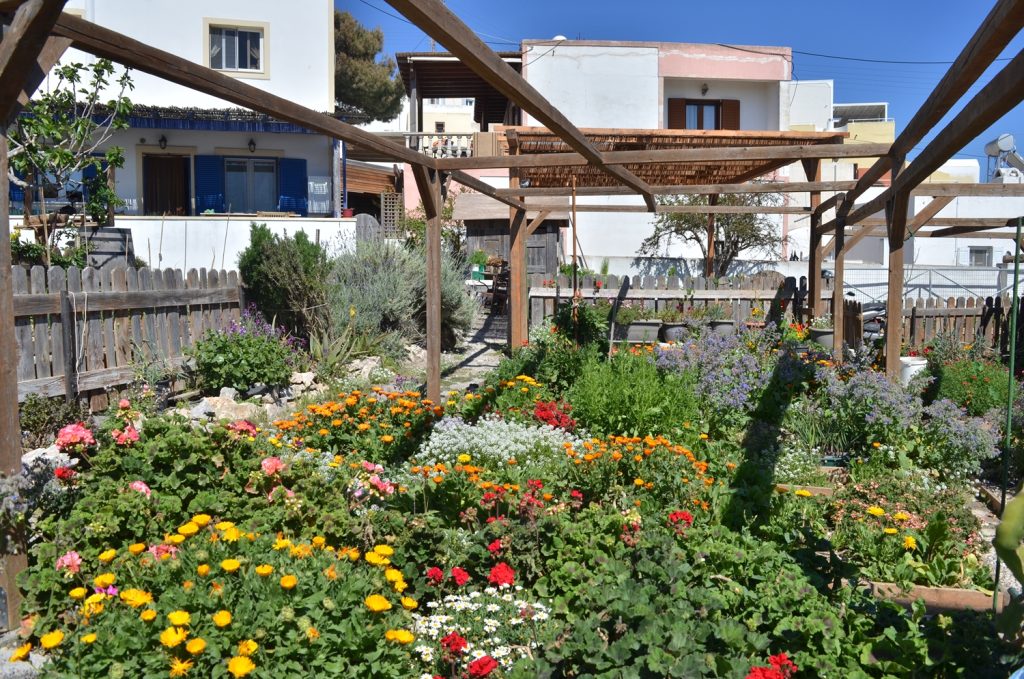
In the village of Pyrgos, often considered the most authentic traditional village on the island, a small project called Kisiras Microgreens offers a completely different perspective on Santorini.
This is not the glamorous Santorini of infinity pools and designer hotels. It is Santorini connected to the earth.
Microgreens may sound like a trendy ingredient associated with modern restaurants, but what Kisiras is doing feels far more meaningful than a passing culinary trend. The farm focuses on cultivating young edible greens and shoots packed with concentrated flavor and nutritional value. On an island where water has always been scarce and agriculture has required constant adaptation, this kind of sustainable cultivation feels perfectly suited to the environment.
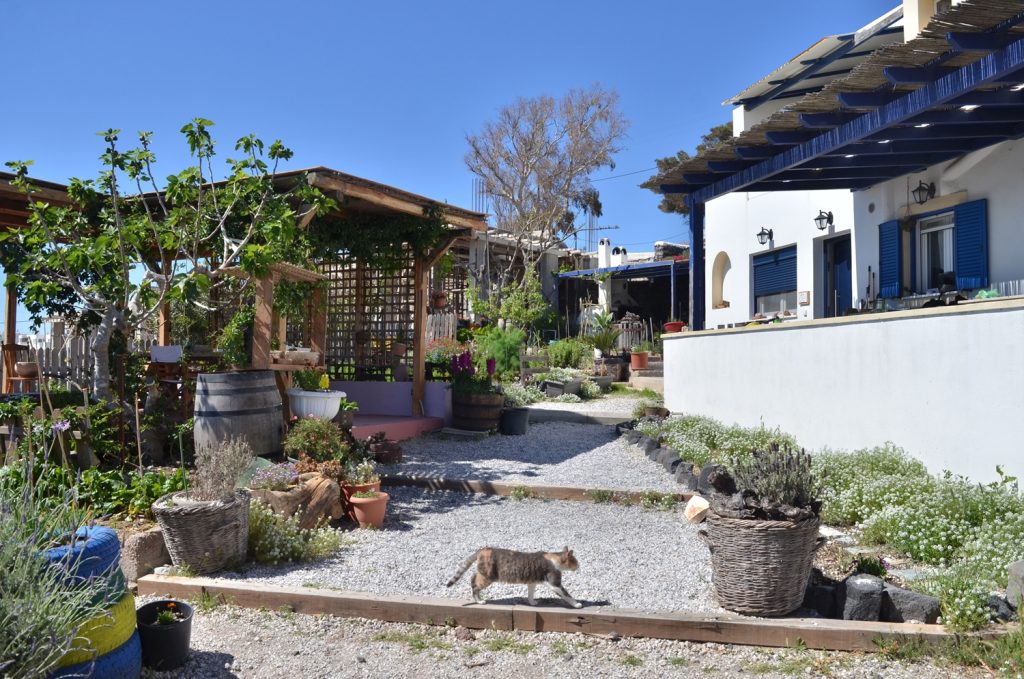
Visiting the farm changes the way you see the island. Suddenly, Santorini is no longer just a dramatic backdrop for photography. It becomes a living ecosystem shaped by resilience and ingenuity.
The volcanic soil plays a major role in this story. Rich in minerals and uniquely porous, it forces plants to grow differently, producing flavors that feel more concentrated and expressive. It is one of the reasons why Santorini’s agricultural traditions have fascinated chefs and food lovers for decades.
Today, many of the island’s best restaurants increasingly collaborate with small local producers like Kisiras, embracing a more sustainable and locally rooted food culture. In a destination overwhelmed by global tourism, these small farms quietly preserve a connection to the island’s original identity.
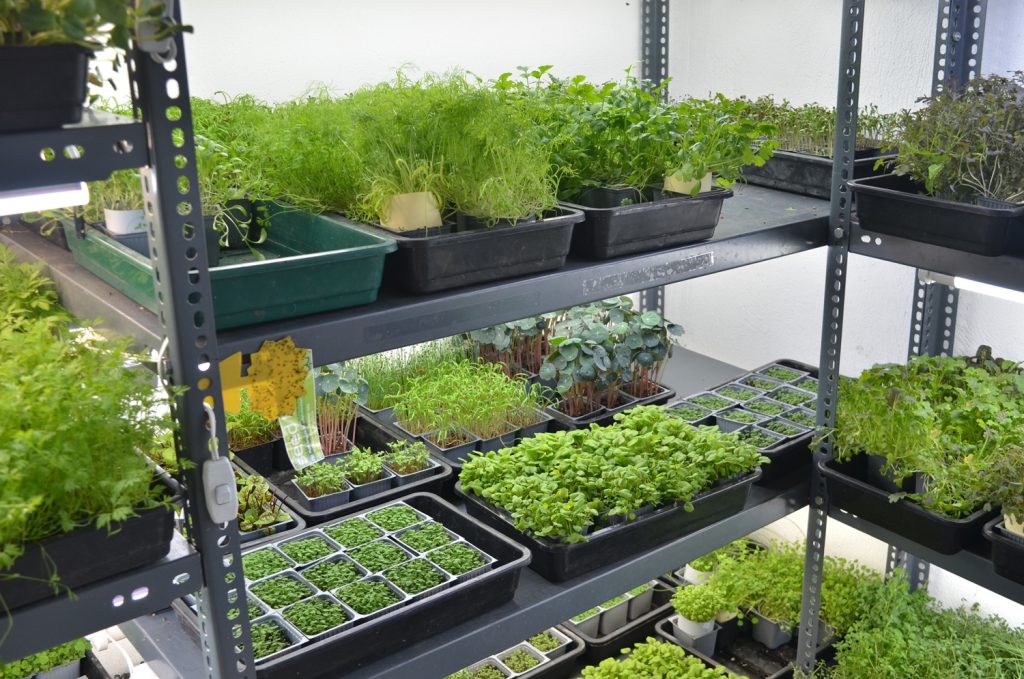
And perhaps that is what makes Kisiras so interesting. It represents a different future for Santorini, one that values local production, environmental awareness, and authenticity over excess.
Pyrgos itself provides the perfect setting for this story. Unlike the polished glamour of Oia, Pyrgos feels calm and deeply human. Narrow alleyways climb toward the remains of a Venetian castle, cats sleep on sunlit staircases, and the scent of herbs drifts through the air carried by the wind from the hills.
Here, Santorini feels less like a luxury brand and more like a real island.
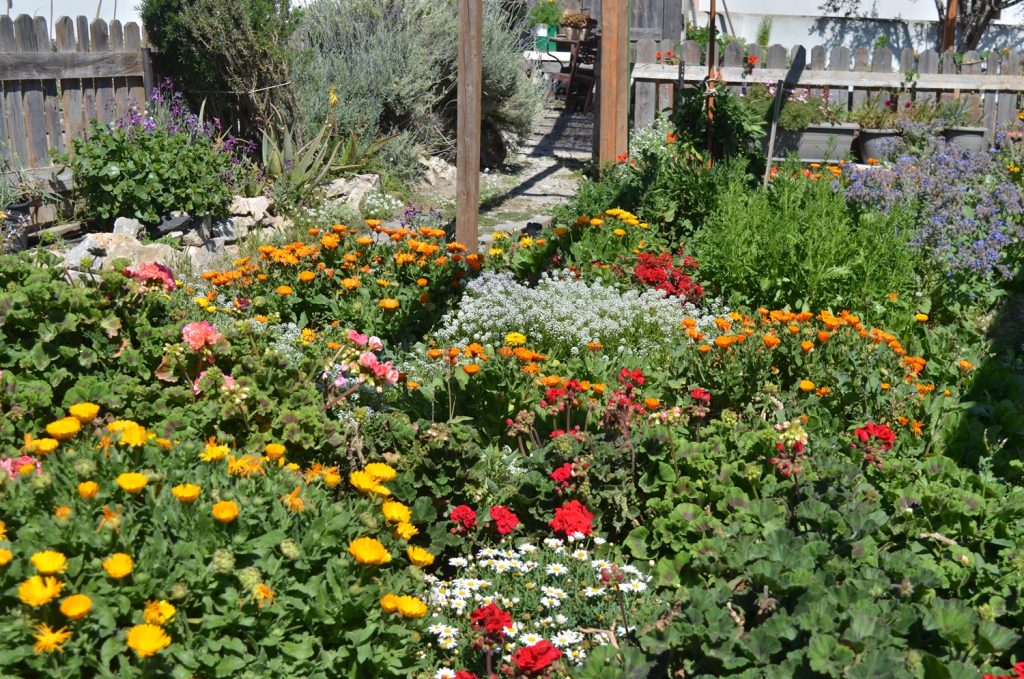
And in that atmosphere, a small microgreens farm somehow becomes symbolic of something much larger: Santorini’s attempt to rediscover balance between international fame and local life.
Akrotiri: The Discovery That Changed Santorini Forever
Yet no place explains Santorini more profoundly than Akrotiri.
Today, millions visit the island for its beauty. But before Santorini became one of the world’s most recognizable travel destinations, it first captured global attention because of archaeology.
When major excavations began in 1967 under the leadership of archaeologist Spyridon Marinatos, the world uncovered something extraordinary: an entire Bronze Age city buried beneath volcanic ash.
Akrotiri is often called the “Greek Pompeii,” but many archaeologists consider it even more significant. The settlement belonged to the sophisticated Minoan civilization and revealed an astonishingly advanced urban society for its time, multi-story buildings, intricate frescoes, drainage systems, and extensive trade networks across the Aegean world.
Then came catastrophe.
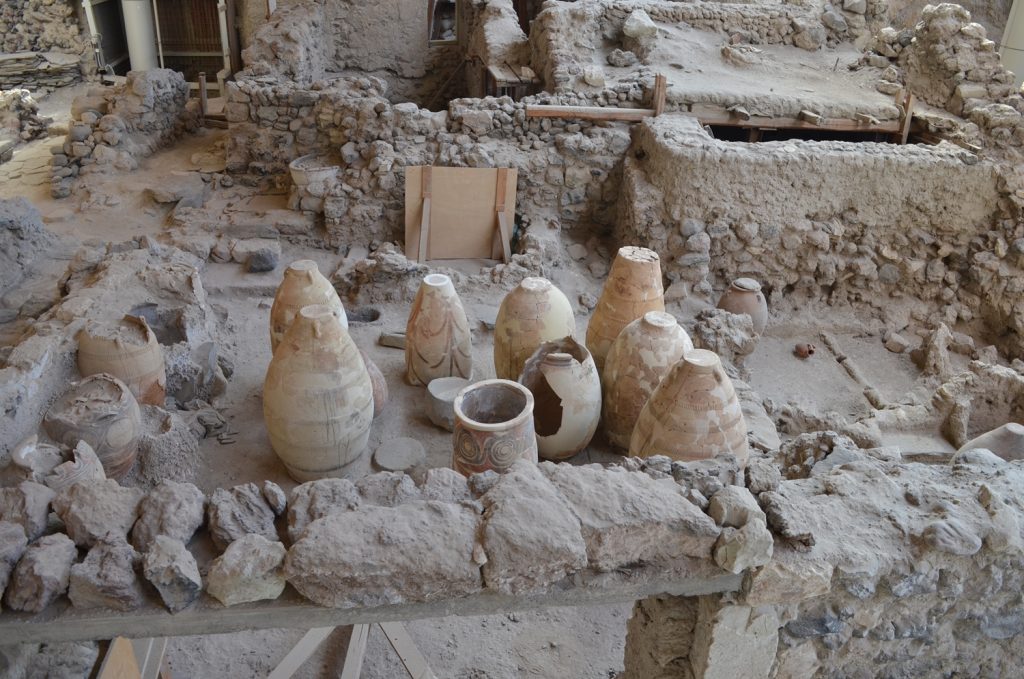
A massive volcanic eruption in the 16th century BCE destroyed the settlement and permanently transformed the geography of Santorini itself. Layers of ash preserved the city for thousands of years, allowing modern visitors to walk through streets and buildings that feel hauntingly alive.
There are moments inside Akrotiri when the silence feels overwhelming. Sunlight filters through the protective structure above the ruins, illuminating ancient walls and pathways where people once lived ordinary lives before the eruption changed everything.
Many believe the destruction of Akrotiri may even have inspired the legend of Atlantis. While no definitive proof exists, the theory continues to captivate imaginations around the world. Santorini certainly feels like a place born from myth.
But beyond the mystery and historical importance, Akrotiri also played a crucial role in shaping Santorini’s modern identity.
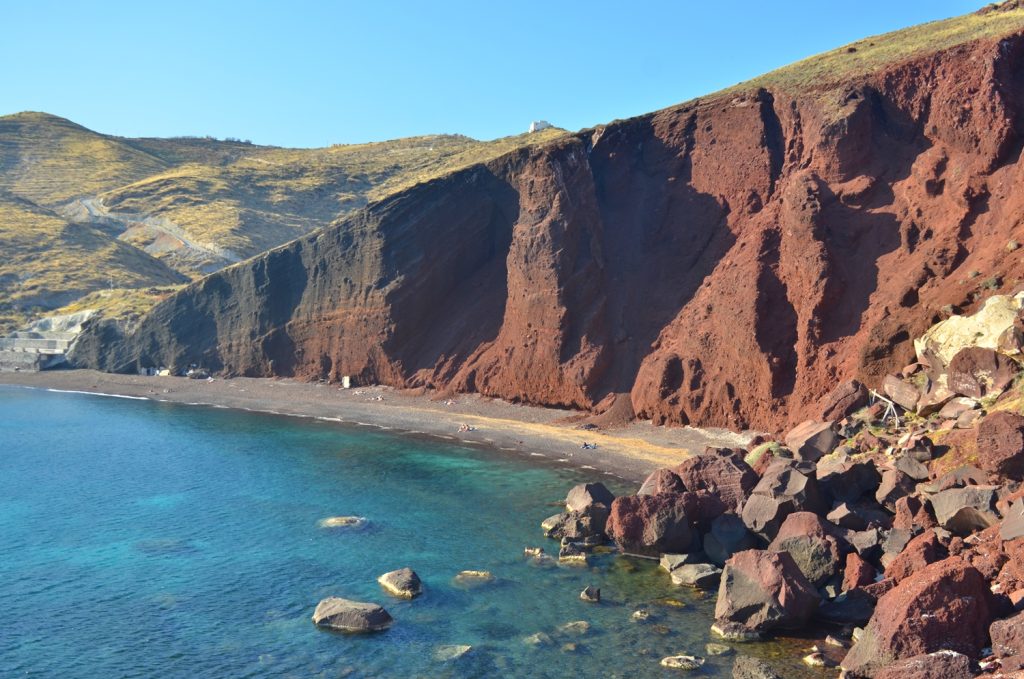
Before tourism transformed the island, Santorini was relatively isolated and economically modest. The discovery of Akrotiri attracted archaeologists, historians, writers, artists, and culturally curious travelers long before luxury tourism arrived. The excavation gave Santorini intellectual and historical significance. Suddenly, the island was not only beautiful, it was important.
In many ways, Akrotiri helped create the foundations of modern Santorini tourism.
Later came boutique hotels, destination weddings, cruise ships, and social media fame. But archaeology was one of the first reasons the international world began paying serious attention to the island.
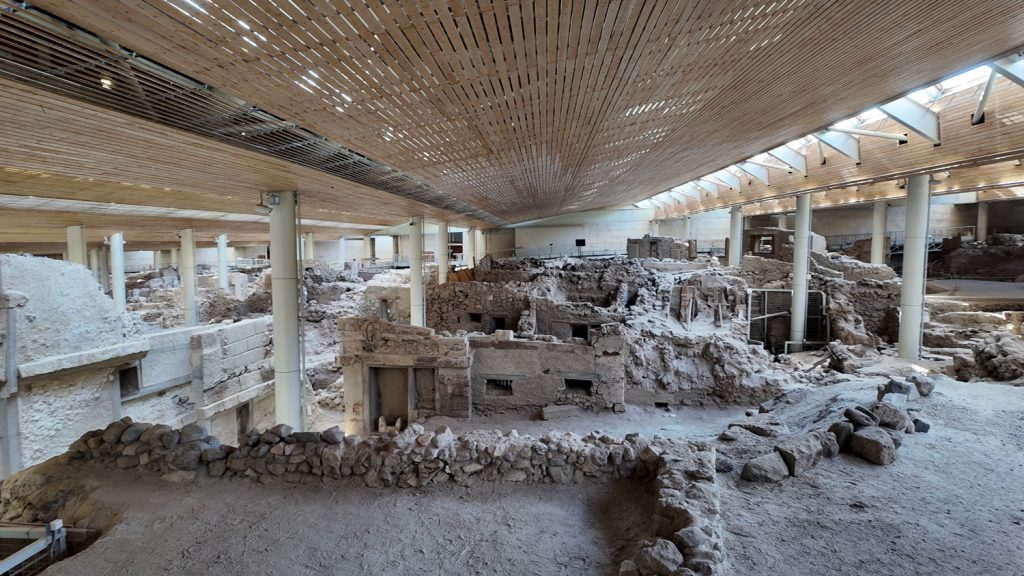
Even today, while crowds gather in Oia for sunset photographs, Akrotiri remains one of the few places where visitors can truly feel the depth of Santorini’s history. Walking through the ancient ruins, you realize that this island is more than a destination.
It is a story about destruction and rebirth.
A volcano once devastated Santorini and somehow also created one of the most beautiful places on Earth.
The Santorini That Stays With You
The best journeys are rarely the ones where we simply see the most famous places. They are the ones where we discover something unexpected.
And the real Santorini lives precisely in those quieter corners.
In the sound of ancient instruments echoing through Symposion.
In the taste of greens growing from volcanic ash in Pyrgos.
In the silent streets of Akrotiri, buried for more than three thousand years beneath the earth.
These are the places that transform Santorini from a postcard into something far more meaningful.
An island with a soul.