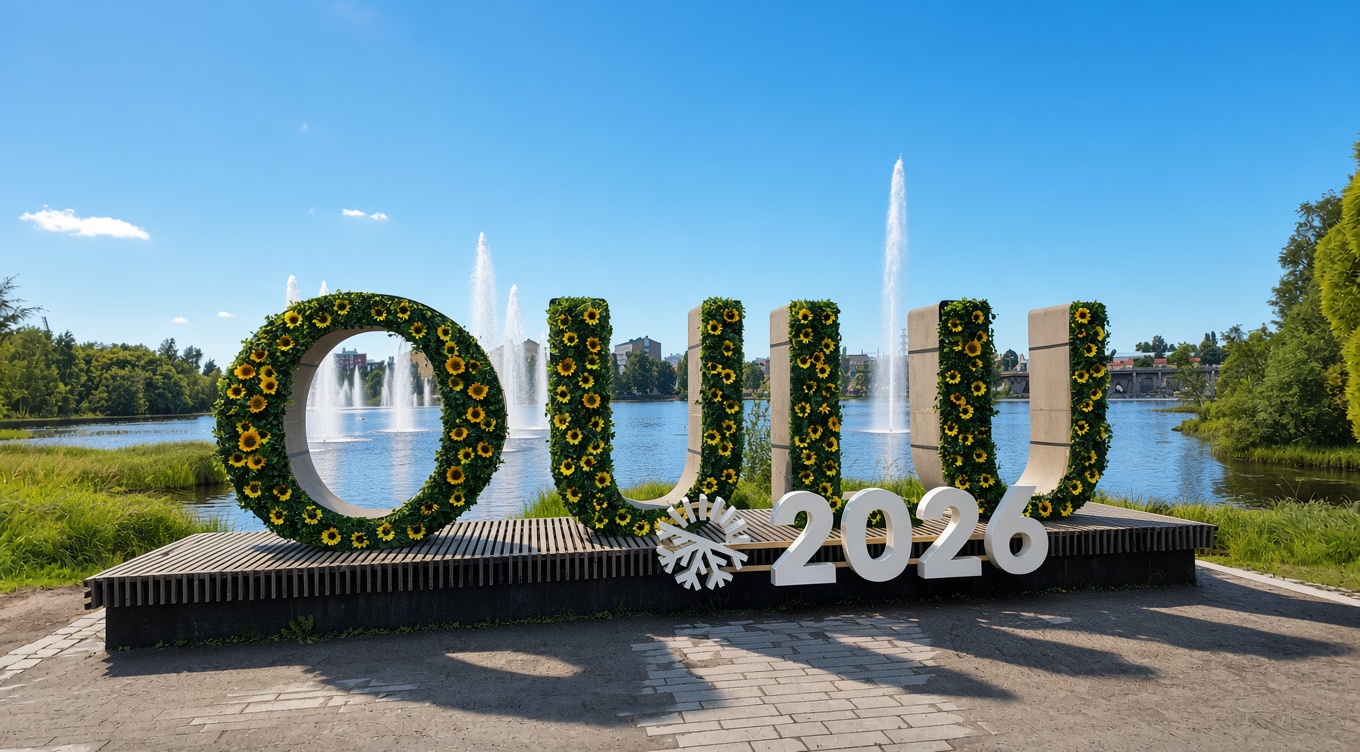
In Finland, a country that has topped the world’s happiness rankings for years, happiness is not understood simply as a personal feeling. In Oulu, in the heart of the European Arctic, this summer it has become something to be shared – around the same table, in the streets, in nature, in the sauna, and through art that goes beyond museums and galleries. As the European Capital of Culture 2026, this city in northern Finland is showing that culture does not have to be elitist and closed off. It can be an open-air dinner for thousands of people, a bike ride through the dunes, a temporary park in a space that was empty until yesterday, or simply a reason for neighbours to leave their homes and spend time together.
A One-Kilometre-Long Table
If there is one event that captures the idea of Oulu as European Capital of Culture in a single image, it is Summer Night’s Dinner.
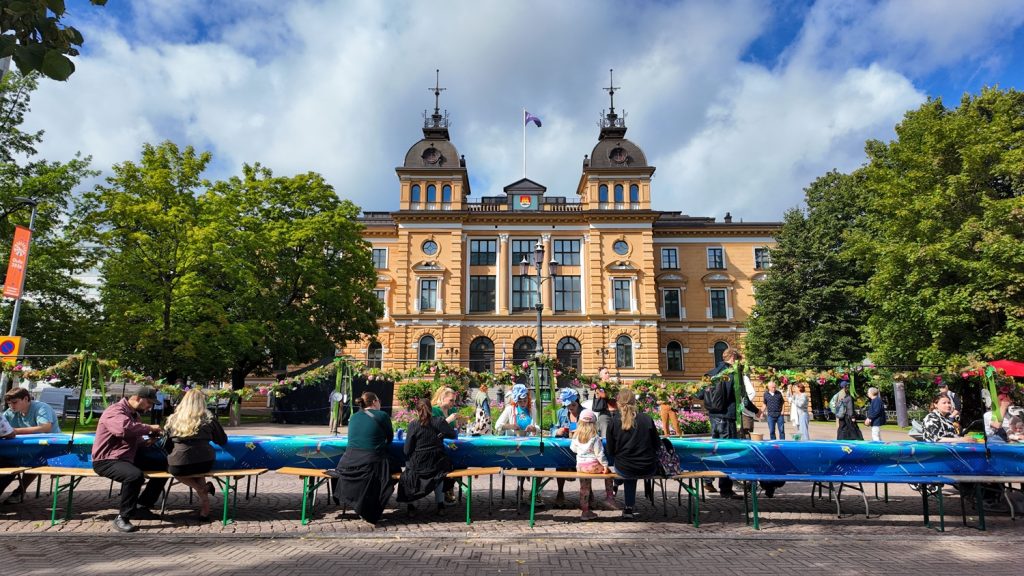
In mid-August, the centre of Oulu was transformed into a huge open-air dining room. A one-kilometre-long table stretched through the city centre, from the Market Square to the Rotuaari pedestrian area and further towards the railway station. Residents and visitors, families and friends, restaurant and café owners, local producers, artists and passers-by gathered around it. The event was free and open to everyone, with no age restrictions.
But this was not simply an unusual picnic.
It was, in many ways, a manifesto of the Oulu2026 philosophy: what happens when a city becomes a shared living room for a few hours?
At the table, guests could taste food from northern Finland – simple, seasonal and free of unnecessary complication. Salmon, vegetables, berries and other local ingredients showed just how minimalist and, at the same time, exceptionally delicious Arctic cuisine can be. There was, of course, much more than traditional northern flavours, with restaurants, cafés, shops and food trucks all taking part. Around 60 food businesses participated in the event.
And then there was a detail that gave the entire story an international dimension.
The Designers’ Association of Northern Finland, in collaboration with the China Academy of Art in Hangzhou, Oulu’s sister city, designed the tables and decoration for this special dinner. Five Chinese students spent more than a year researching Oulu, its nature, culture, architecture and way of life, before creating five patterns for the one-kilometre-long tablecloth. The entire project was conceived as a message of friendship and peace.
An ordinary object – a tablecloth – thus became part of a story about how different cultures can meet, learn about one another and create something together.
The Arctic Is Not Quite What You Imagined
Oulu is far enough north to be part of the Arctic region, yet experiencing the city in summer completely challenges the stereotype of a cold, dark and inaccessible North.
Here, summer means long days, nature, bicycles, water, terraces and life outdoors. That is why the Oulu2026 programme during the summer is much more than a conventional cultural calendar. The official programme includes thousands of events, works of art and experiences across the wider region, with 40 municipalities taking part.
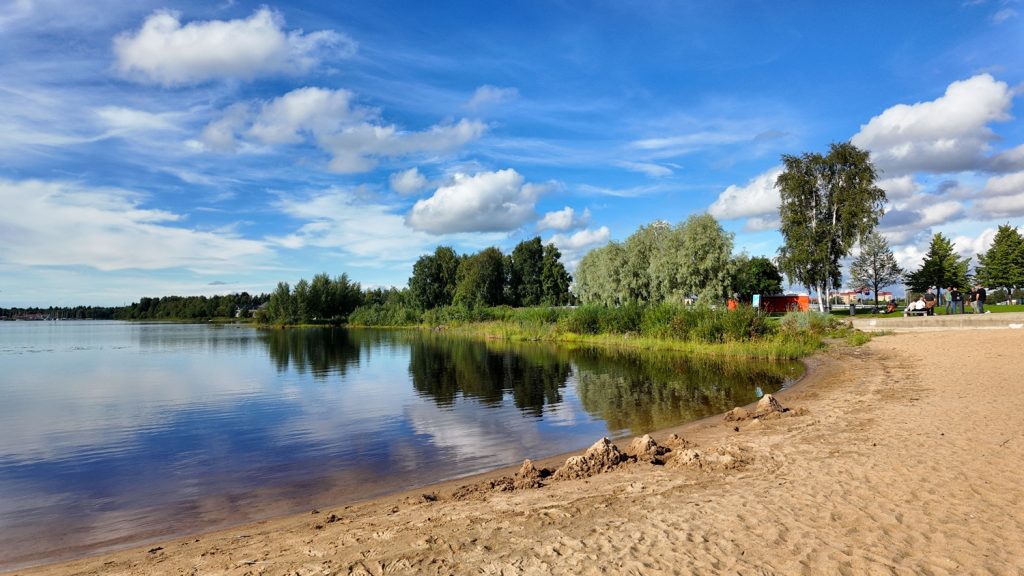
You can, for example, hop on a bike and explore the nature around the city, go stand-up paddleboarding on the Oulujoki River delta, or simply walk through the city and discover art where you least expect it. The local summer tourism programme combines nature, active experiences and urban culture.
And then there is the sauna.
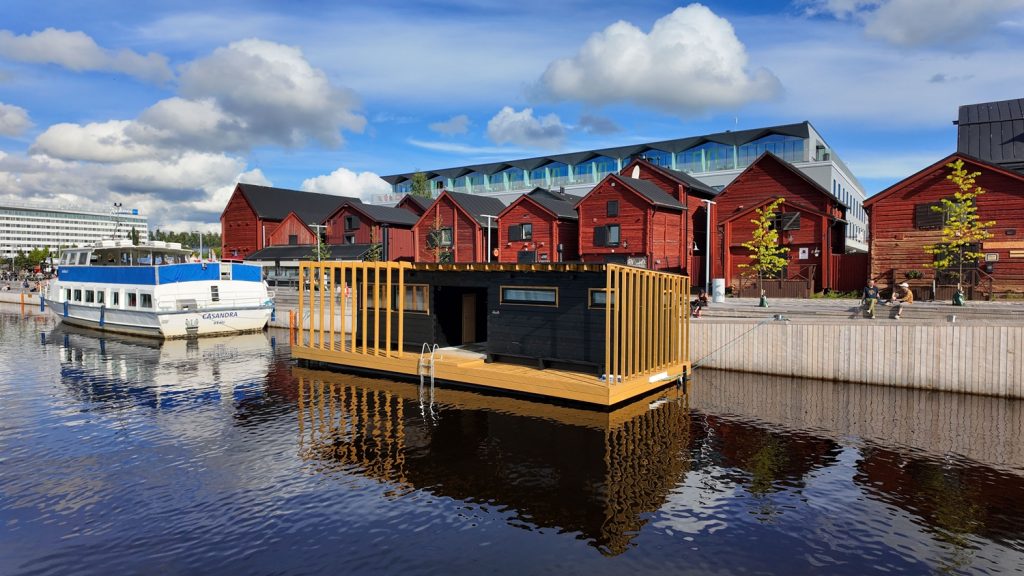
In Finland, it is not a tourist gimmick, but an essential part of everyday life and culture. In Oulu, it fits naturally into the wider idea of a cultural capital: culture is not only something you look at, but something you do, experience and share with others.
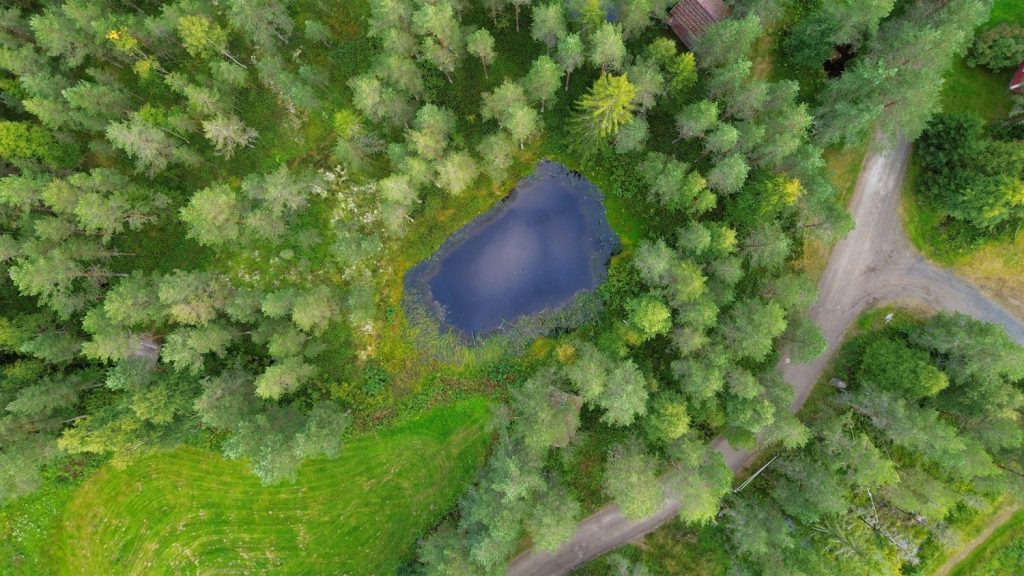
Perhaps that is the most interesting thing about Oulu2026. You do not have to be an expert in contemporary art to enjoy the programme and cultural offering.
A City as a Gallery – and an Experiment
One of the projects that best illustrates this idea is The Nook, a project by Oulu Urban Culture.
The idea is simple: what can be done with urban spaces that are empty, dull or underused?
Instead of immediately building large and permanent solutions, The Nook experiments. Such spaces are transformed into small urban places for relaxation, socialising, greenery, play or simply observing the city. The project is being developed with local and international partners, with the aim of testing how public space can become an extension of the living room.
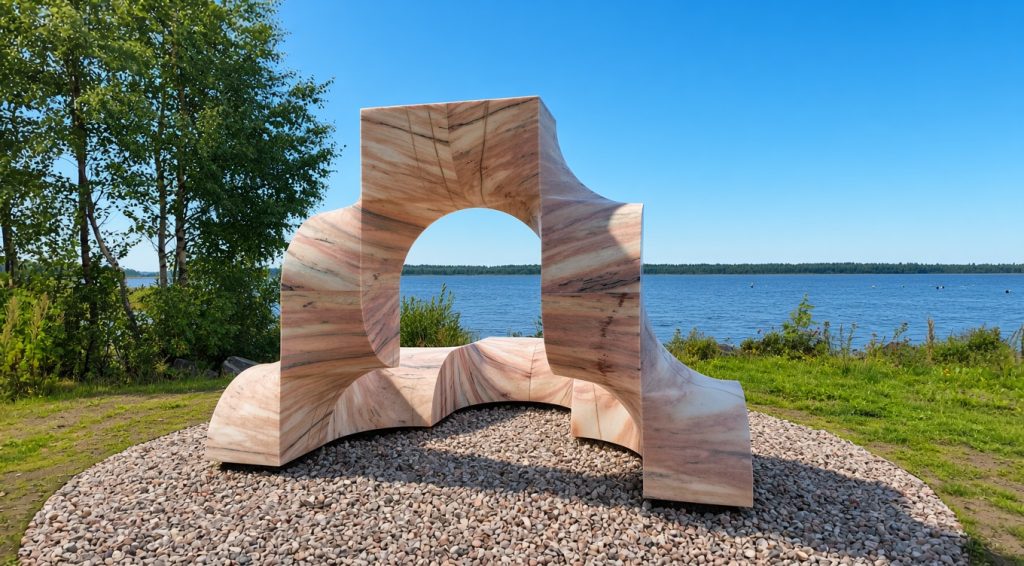
The most interesting part is that these spaces are not intended to be monumental structures that remain for decades. On the contrary – some of the interventions are temporary.
And this creates an interesting paradox: something that was meant to exist for only a few months is already becoming so popular with residents that people are beginning to ask – why couldn’t this stay forever?
A similar philosophy can be found in the ARToulu project, where art leaves the galleries and spreads across neighbourhoods, parks, paths and public spaces. Some works are temporary, while others will remain for the long term, but the common goal is the same: to encourage residents to see their familiar city through different eyes.
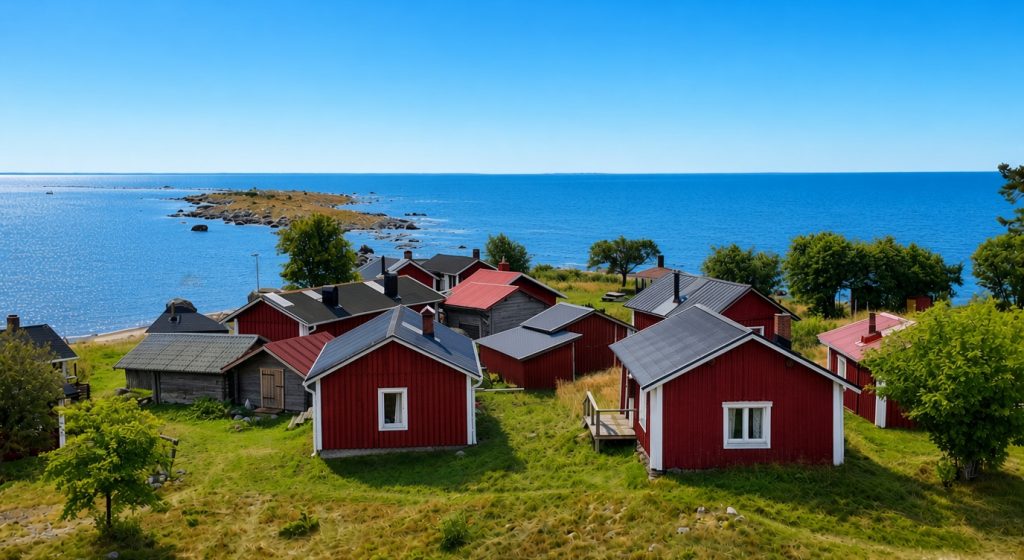
Oulu is therefore not trying to become just another city with a few major museums that can be ticked off during a weekend visit. Oulu is trying to turn the entire city into a cultural experience.
And it is succeeding.
The Future of Fashion, Inspired by the North
Of course, museums and traditional forms of art still have their place.
If you are visiting Oulu during the summer of 2026, one exhibition worth highlighting is Tomorrow’s Wardrobe at the Oulu Art Museum, on view from May through October.
The exhibition asks a question that sounds simple, but is becoming increasingly important: what will the clothes of the future look like?
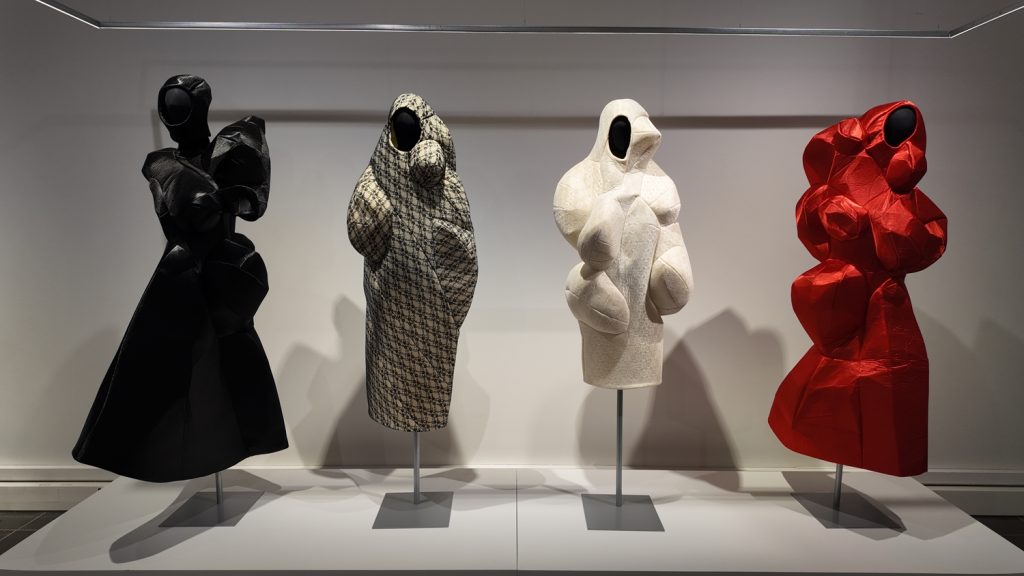
The answer is not simply about new cuts and silhouettes. The international exhibition explores the intersection of experimental design, technology, ecology, new materials and new ways of thinking about the body and identity. It includes 3D printing, virtual methods, biomaterials and ideas aimed at moving the fashion industry away from unsustainable models of production.
In other words, even when you step inside a museum, Oulu brings you back to one of its biggest themes: the future and humanity’s relationship with nature.
Perhaps This Is the Secret to Finnish Happiness
Oulu is the European Capital of Culture, but it does not try too hard to behave like a “capital”.
There is no need for grand gestures at every turn. Instead, culture appears where you least expect it – around a kilometre-long table, on a bicycle, in a temporary urban corner, in a sauna, on the banks of a river, or in a museum thinking about what we will be wearing 50 years from now.
And that is why Summer Night’s Dinner may be the best metaphor for the entire Oulu2026 project. Thousands of people gathered around one shared idea: to spend time together, taste local specialities, talk and meet other people. The official programme places strong emphasis on making culture accessible to everyone, while many projects involve residents as participants rather than simply as an audience.
In a country that has topped global happiness rankings for years, Oulu offers a rather simple lesson.
Perhaps happiness is not only about prosperity, nature and a good social system. Perhaps it is also about the feeling that you belong to the place where you live.
And in Oulu in 2026, that is precisely what culture is there to do – to create more space for people to meet. Even if that space lasts only for one summer.